The 9 Ways to Finance Your Foreclosure Purchase

Buying a foreclosure property at the auction?

You better have the money lined up ahead of time.Dollar Bill

Cash is king at the foreclosure auction.  In some states you have a day or two to pay for the property, while in others the auctioneer won’t even gavel the property sold until certified funds are tendered.  Generally you have to be prepared to pay your entire bid amount right away.

Most other creative real estate investing strategies focus on how to buy or control a property with low or no money down.  That just doesn’t work with foreclosures — at least not at the auction stage.  You might find a pre-foreclosure or REO strategy that lets you get by without cash…. but not a foreclosure auction.

Here is a summary of the most common ways to pay for a foreclosure property.

1.  Cash

Well, that’s obvious, right?  If you have cash in hand (or in a checking account), you don’t need to look further.  Get a cashiers’ check from your bank.  Pay for your property.

Just make sure your bank account is available as cash.  Your CD or money market account might have penalties for withdrawals.  Your “cash management” brokerage account might take longer to liquidate than you think.  Find out in advance how long it will take to get those accounts turned into cash or certified funds.

Obviously, you need to have some idea how much money to bring to the sale.  Will you be making a 5% down payment… or do you have to pay the entire bid amount?  And you need to know the form of payment accepted– cash, cashier’s check, attorney trust account check, money order, etc.  Very few auctions accept a personal check…

If the auction just requires a deposit, most investors will bring a variety of small cashier’s checks and some cash.  So if you are looking to buy a $100,000 house and the rules require a 5% deposit check, you might bring a $5,000 cashier’s check… and a little cash in case you get caught up in the bidding.

2.  Retirement or Insurance

Most people don’t know their IRA can invest in real estate… as long as you have your account with a custodian that permits you to “self-direct” your investments.  With a SD-IRA, you can buy foreclosures, although the timing of getting your cash to the auction can be tricky.  You need to be prepared in advance.  Usually you will need to make arrangements to wire money from the custodian to an attorney or escrow agent (since giving you the money directly is not allowed).

Permanent life insurance (think whole life here… not term) also has cash value that can be borrowed quickly and inexpensively.  But again, you need to talk to your insurance agent ahead of time to know you will have the cash in time for the auction, and how the repayment of the “policy loan” works.

3.  Bank Loan or Line of Credit

Forget about traditional home loans and mortgage brokers.  Banks won’t lend without collateral, and they are not going to cut a check for a foreclosure property you don’t yet own.  They can’t put a mortgage on the property until redemption and objection periods expire. So these lenders won’t lend money when you are looking to buy at a foreclosure auction.

But with good credit and collateral, you might be able to obtain a personal line of credit or a loan secured by some other valuable collateral (your home, business assets, etc).  Small local banks and credit unions are your best option here.  These are easy-to-access loans, with minimal paperwork.  And you usually incur no costs until you use the money on the line of credit.

Most investors have a substantial line of credit as a security blanket, even if they don’t need the money as a funding source.  Just in case.

4.  Credit Cards

Credit cards?  Really? Do you really want to borrow on credit cards?

Actually, if you have a low, introductory interest rate, a low-cost cash advance option, AND a great investment opportunity, credit cards might just work.  But do the math first.  Make SURE the investment warrants the high cost of borrowing on plastic.  For most investors, this would be the last resort.

But every experienced investor has run across somebody who made their first deal work on credit cards.  At a foreclosure auction, it is unlikely they take credit cards as payment, so you will need to make arrangements to get a cash advance or have checks to cash at a local bank against the credit account.

Credit Cards

5.  Friends and Family

For many people, the LAST place they would ever look for money would be friends or family.  It’s embarrassing to ask, you don’t want to owe any favors, and you just know they are going to try and talk you out of this whole idea.

For others, friends and family seem like an obvious source of funds.  But be careful.  Even if they believe in you enough to lend or partner with you in exchange for a cut of the profits or a nice interest rate, is it worth the risk?  Do you want to be reminded of “Johnny’s Stupid Idea” every Thanksgiving for the next 20 years, if things don’t go exactly as planned?

But definitely ask them. Friends and Family are almost always going to try to shoot you down and  explain why your plan won’t work.  But that’s a good test of how well you can articulate your plan.  If you can convince them … you might be ready to start investing.  On the other hand, they might convince you that you have no business doing it.  Which also might not be so bad either.  If you can’t convince friends and family, maybe you just aren’t ready…

6.  Partnerships

Years ago a realtor told me “partnerships are sinking ships”.  Wisdom to live by.

The problem with partnerships is that very few partnerships start with a clear, mutual understanding of exactly what everybody is expecting out of the partnership.  This can lead to huge problems.  That’s why EVERY partnership should be reduced to writing.  Anticipate the problems before they come up to keep everybody happy.  It’s a lot of work… and a bit of a buzzkill… to think through all the negative things that might happen, but it will never be easier to address these issues than right before you start.

Most foreclosure partnerships involve one partner putting up the money and the other partner doing all the work, with a split of profits at the end.  But every partnership is different.

As you get more experienced, you can put together a syndicate with many partners to increase investment opportunities and share the risk.  But you don’t want to start raising money this way without solid legal advice.

While we use “partnership” as short-hand for people teaming up, realize that a General Partnership has its own legal status, and partners become liable for the debts of the other partners.  So a lawyer would usually recommend the “partners” use a different form such as an LLC, Corporation or Limited Partnership. All have the same basic idea– some people put up money to make a passive return, while others do the work.

7. Investors

Also called “private money lenders” in some circles, investors are simply individuals with money to lend.  Look for the “money to lend” ad in the classifieds or on Craig’s List and you’ve found an investor.

Unlike partners, investors are looking for a specific return, not a cut of the profits.  Some only lend with outside collateral, such as your home.  Others lend based on their opinion of your experience and ability. Expect high interest rates and short term repayment schedules.  Plan on pitching an investor the way you would a commercial loan officer at your bank: explain your plan, articulate your expectations and generally sound like you know what you are doing.

8. Hard Money Lenders

Hard Money Lenders are easy to confuse with Investors.  A Hard Money Lender is generally an individual making short term, high interest loans to people who can’t borrow the money they need from a bank.  The difference is that Hard Money Lenders are generally more interested in the collateral than the borrower or the profitability of the deal.  They will only lend if they think what you are buying at the foreclosure sale is worth a lot more than you are paying for it.

Hard money is expensive, but it can work great with foreclosures you intend to flip.  The loans are approved immediately with no red tape, and the lender doesn’t care that the property needs to be rehabbed.  But hard money generally is repaid in six months to a year, so it limits your exit strategies– you don’t want to buy and hold with hard money.

Hard Money

9. Wholesale Flipping

Most people understand flipping.  You buy, rehab and sell.  But Wholesale Flipping lets you make money without ever actually owning the property.  Just as you can assign a contract for cash in a normal real estate deal, you can assign your purchase rights at the foreclosure sale to another investor who wants to do the rehab and sell the property to the end buyer.

As a wholesaler, you do all the legwork, inspections and bidding… then you get a preset fee for assigning the deal.  You make a lot less than you otherwise would if you handled the entire deal, but you don’t have the same risk and work as the rehabber will.  Good wholesalers have a list of qualified buyers lined up before they bid on the foreclosure auction…. or they end up walking from the deposit.

Conclusion

So now you know how to raise money to buy at the foreclosure auction… which method are you going to use… and are you ready to start?

LinkedInPinterestRedditStumbleUponEmailShare

Foreclosure Hazards- No Survey?

Buying at the foreclosure sale is risky business.  Every investor knows that.  The property is sold “as is”, and you don’t get a guarantee of clear title.  But there are so many inherent risks, it is difficult to list them all.

Today I learned about a new risk.  From a long-time investor who had also never run across this situation.

The Survey

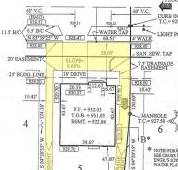
SurveyObviously, nobody gets a survey of the property before they buy at the foreclosure sale.  Not enough time, and the expense isn’t warranted, especially considering all the potential properties at the sale. I’m not even sure if a surveyor can take your order if you have no interest in the property…

Well in this case, the investor bought a great house at the foreclosure sale, quickly rehabbed it and immediately got a finance contract to sell the home.  It was just about to close.

HOWEVER. 

As with every loan, the lender ordered a survey.  A survey shows where the improvements are built, and lets the lender know if there are any potential problems like encroachments or easements that might impact the property value.

The Problem

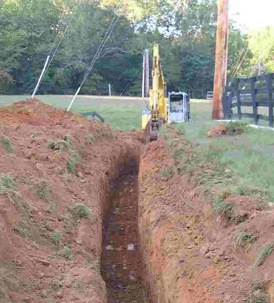
In this case, the survey showed the house encroached into an Underground Utility Easement. By just 12 inches.  The builder located the footers of the house in an area reserved for underground power cables.  Just a foot off… but it had a huge impact.

The title insurer had no choice but to list the encroachment as an exception to title coverage. 

And the lender had no choice but to deny the loan.

So the deal fell apart.

The “Solution”??

“Luckily”, the utility company in question has a process for requesting a partial release of a recorded utility easement. 

The application fee is $500, and you wait 12 weeks for their engineer to decide if the home interferes with the underground utilities. 

If the home doesn’t interfere, you get a recorded release a few weeks later. 

If the home is determined to be too close to the actual power lines, then you pay another $2,000, wait another 12 weeks, and THEN pay for the actual cost of moving the utilities away from the house.

underground utilitiesBest case scenario– this problem ONLY cost the investor a full price sale, $500, and four months of waiting. 

Worst case scenario– a lost sale, eight months and $10k-$15k.

The REAL Solution

So what would you do?

Well this investor has no problem holding the house.  He can:

  • Rent it to a tenant;
  • Lease-option to someone with an option premium;
  • Drop the price for a cash buyer willing to overlook the title problem; or
  • Sell the home with owner financing, to someone who won’t care about an encroachment exception.

But he has all those options because he has multiple exit strategies.

What would YOU do? 

  • What if you used all your capital to buy and rehab a house, expecting to get repaid and make a profit in a month?
  • What if you borrowed hard money and had to repay it (with interest and points) before the utility company even reviewed your initial application?
  • What would you do if the ultimate cost of fixing the encroachment exceeded your profit in the deal?

How to Prevent the Problem

So, how do you make sure this never happens to you?

I have no idea.

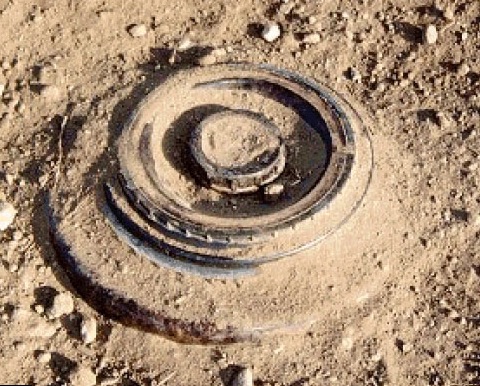
Unfortunately, I don’t see any way to avoid stepping on this hidden land mine.Land Mine

As a real estate attorney, I’ve seen PLENTY of encroachments on surveys that ended up killing a financing deal.  It happens way more often than anybody would expect.  Houses built on a boundary line.  Pools that encroach.  Fences that are not straight. 

But this is the first time I’ve seen it on a relatively new house in a platted subdivision with a reputable builder.

And I have no idea how the investor would have been able to spot the problem before the sale. 

This is just one of the inherent risks of buying foreclosures….

I’d love comments or suggestions if anybody knows how to avoid this trap…

David


LinkedInPinterestRedditStumbleUponEmailShare

Friday 4closure Round Up 5.4.12

–From Trulia:

Strong Housing Demand and Tightening Inventories Spark Nearly 2 Percent Rise in Asking Prices over Previous Quarter

Asking prices on for-sale homes–which lead sales prices by approximately two or more months–were 0.5 percent higher in April than in March, seasonally adjusted. Together with increases in March and February, asking prices in April rose nationally 1.9 percent quarter over quarter (Q-o-Q), seasonally adjusted. The price increase unadjusted for seasonality was even higher: 4.8 percent Q-o-Q, since prices typically jump in springtime. Year over year (Y-o-Y), asking prices rose 0.2 percent nationally.

“Housing prices have already bottomed with asking prices on the rise for three straight months. Aside from a stumble in December, asking prices have been stable or rising for the last eight months,” said Jed Kolko, Trulia’s Chief Economist. “Prices have joined the recovery, alongside sales and construction. But foreclosures threaten prices, especially in judicial-foreclosure states like Florida, New Jersey, Illinois and New York, where many more distressed sales are still to come.”


–From Freddie Mac:

Fixed Mortgage Rates Average New All-Time Record Lows

Freddie Mac (OTC: FMCC) today released the results of its Primary Mortgage Market Survey® (PMMS®), showing average fixed mortgage rates finding new all-time record lows … The 30-year fixed averaged 3.84 percent, down from its previous all-time record low of 3.87 percent last registered on February 9, 2012…… Last year at this time, the 30-year FRM averaged 4.71 percent.


 –From RealtyTrac:

REO Properties Devoured by Investors

  • Investment homes sales soared a whopping 66 percent in 2011, with investors purchasing 1.23 million properties compared to 749,000 in 2010
  • Sales of investment properties jumped to 27 percent of the market in 2011, compared with 17 percent of the market in 2010.
  • 41 percent of investment buyers purchased more than one property in 2011.

REO Properties
All told, the REO inventory was a staggering 634,000 properties as of the end of March 2012, according to RealtyTrac. Uncle Sam is the largest holder of REO property. The government sponsored enterprises — Fannie Mae and Freddie Mac — together own some 180,000 REO listings.

Nationwide, investors are buying  REO real estate, rehabbing them and either renting them out for cash flow or putting them back into the market for re-sale. In a letter to federal agencies and regulators, the NAR urged policymakers and lenders to expand the  availability of financing for qualified buyers and investors to reduce the number of REO properties on the market.


–From Nick Timiraos at the WSJ:

Housing Ends Slide but Faces a Long Bottom

Nearly six years after home prices started falling, more U.S. housing markets appear to be nearing a new phase: a prolonged bottom.

Housing economists are debating whether that shadow inventory will spoil any housing recovery. “That’ll be like a ball and chain,” said Mark Fleming, chief economist at CoreLogic. “It won’t prevent a recovery, but it could drag it out over several years.”

Ms. Zelman … said the shadow inventory is “not going to result in the double dip that people always talk about.” She points to a burgeoning appetite for housing from investors, who are scooping up homes that can be converted to rentals, and six years of pent-up demand from traditional buyers who feel better about their financial prospects. “The fear is gone,” she said.

While the foreclosure overhang is serious, some economists say there is a less-noticed tailwind that could balance things out: the sharp decline in new construction over the past four years. “A lot of the people who talk about ‘shadow inventory’ don’t talk about how slow the overall housing stock has been growing,” said Thomas Lawler, an independent housing economist


–From Realty Check by Diana Olick

Flood of Foreclosures Still Fails to Materialize

The number of homes entering the foreclosure process rose in March, up 8.1 percent, according to a new report from Lender Processing Services, but the volume is down more than 30 percent from a year ago.

Analysts had expected this number to skyrocket immediately following the $25 billion settlement between banks and state governments over fraudulent mortgage servicing.

Foreclosures sales, which are the final stage of the foreclosure process, not sales of bank-owned homes, dropped precipitously in March to their lowest point in over two years…..The foreclosure sales decline also appears to be exclusively in private and portfolio loans, which again points to the settlement.

That low pace of foreclosure sales is keeping foreclosure inventory, or loans in the foreclosure process, at near historic highs, according to LPS. That number may be heading lower, however, as banks ramp up the short sale process. Short sales, when the bank allows the home to be sold for less than the value of the mortgage, are in fact now outpacing sales of bank-owned homes in many markets, according to a new report from RealtyTrac.

–From CoreLogic:

CoreLogic® Reports 69,000 Completed Foreclosures Nationally in March

CoreLogic … today released its National Foreclosure Report for March, which provides monthly data on completed foreclosures, foreclosure inventory and 90+ day delinquency rates. There were 69,000 completed foreclosures in March 2012 compared to 85,000 in March 2011 and 66,000 in February 2012. Through the first quarter of 2012, there were 198,000 completed foreclosures compared to 232,000 through the first quarter of 2011. Since the start of the financial crisis in September 2008, there have been approximately 3.5 million completed foreclosures.

Approximately 1.4 million homes, or 3.4 percent of all homes with a mortgage, were in the national foreclosure inventory as of March 2012 compared to 1.5 million, or 3.5 percent, in March 2011 and 1.4 million, or 3.4 percent, in February 2012. The number of loans in the foreclosure inventory decreased by nearly 100,000, or 6.0 percent, in March 2012 compared to March 2011.

“The overall delinquency level was unchanged in March, remaining at its lowest point since July 2009,” said Mark Fleming, chief economist for CoreLogic. “Non-judicial foreclosure markets like Nevada, Arizona, and California are experiencing significant improvements in their shares of delinquent borrowers. Some judicial foreclosure states are also improving, like Florida, but not to the extent of non-judicial markets.”

Compared to a year ago, the number of completed foreclosures has slowed,” said Anand Nallathambi, chief executive officer of CoreLogic. “Since the foreclosure inventory is also coming down, this suggests that loan modifications, short sales, deeds-in-lieu are increasingly being used as an alternative to foreclosures to clear distressed assets in our communities.”


LinkedInPinterestRedditStumbleUponEmailShare