Foreclosure Hazards- No Survey?

Buying at the foreclosure sale is risky business.  Every investor knows that.  The property is sold “as is”, and you don’t get a guarantee of clear title.  But there are so many inherent risks, it is difficult to list them all.

Today I learned about a new risk.  From a long-time investor who had also never run across this situation.

The Survey

SurveyObviously, nobody gets a survey of the property before they buy at the foreclosure sale.  Not enough time, and the expense isn’t warranted, especially considering all the potential properties at the sale. I’m not even sure if a surveyor can take your order if you have no interest in the property…

Well in this case, the investor bought a great house at the foreclosure sale, quickly rehabbed it and immediately got a finance contract to sell the home.  It was just about to close.

HOWEVER. 

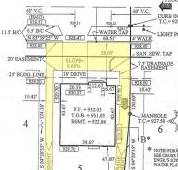
As with every loan, the lender ordered a survey.  A survey shows where the improvements are built, and lets the lender know if there are any potential problems like encroachments or easements that might impact the property value.

The Problem

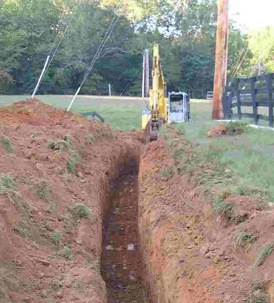
In this case, the survey showed the house encroached into an Underground Utility Easement. By just 12 inches.  The builder located the footers of the house in an area reserved for underground power cables.  Just a foot off… but it had a huge impact.

The title insurer had no choice but to list the encroachment as an exception to title coverage. 

And the lender had no choice but to deny the loan.

So the deal fell apart.

The “Solution”??

“Luckily”, the utility company in question has a process for requesting a partial release of a recorded utility easement. 

The application fee is $500, and you wait 12 weeks for their engineer to decide if the home interferes with the underground utilities. 

If the home doesn’t interfere, you get a recorded release a few weeks later. 

If the home is determined to be too close to the actual power lines, then you pay another $2,000, wait another 12 weeks, and THEN pay for the actual cost of moving the utilities away from the house.

underground utilitiesBest case scenario– this problem ONLY cost the investor a full price sale, $500, and four months of waiting. 

Worst case scenario– a lost sale, eight months and $10k-$15k.

The REAL Solution

So what would you do?

Well this investor has no problem holding the house.  He can:

  • Rent it to a tenant;
  • Lease-option to someone with an option premium;
  • Drop the price for a cash buyer willing to overlook the title problem; or
  • Sell the home with owner financing, to someone who won’t care about an encroachment exception.

But he has all those options because he has multiple exit strategies.

What would YOU do? 

  • What if you used all your capital to buy and rehab a house, expecting to get repaid and make a profit in a month?
  • What if you borrowed hard money and had to repay it (with interest and points) before the utility company even reviewed your initial application?
  • What would you do if the ultimate cost of fixing the encroachment exceeded your profit in the deal?

How to Prevent the Problem

So, how do you make sure this never happens to you?

I have no idea.

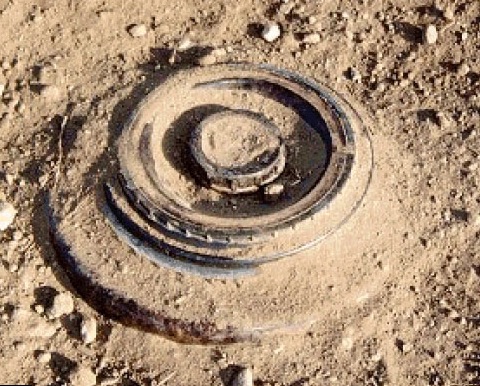
Unfortunately, I don’t see any way to avoid stepping on this hidden land mine.Land Mine

As a real estate attorney, I’ve seen PLENTY of encroachments on surveys that ended up killing a financing deal.  It happens way more often than anybody would expect.  Houses built on a boundary line.  Pools that encroach.  Fences that are not straight. 

But this is the first time I’ve seen it on a relatively new house in a platted subdivision with a reputable builder.

And I have no idea how the investor would have been able to spot the problem before the sale. 

This is just one of the inherent risks of buying foreclosures….

I’d love comments or suggestions if anybody knows how to avoid this trap…

David


LinkedInPinterestRedditStumbleUponEmailShare

Friday 4closure Round Up 5.4.12

–From Trulia:

Strong Housing Demand and Tightening Inventories Spark Nearly 2 Percent Rise in Asking Prices over Previous Quarter

Asking prices on for-sale homes–which lead sales prices by approximately two or more months–were 0.5 percent higher in April than in March, seasonally adjusted. Together with increases in March and February, asking prices in April rose nationally 1.9 percent quarter over quarter (Q-o-Q), seasonally adjusted. The price increase unadjusted for seasonality was even higher: 4.8 percent Q-o-Q, since prices typically jump in springtime. Year over year (Y-o-Y), asking prices rose 0.2 percent nationally.

“Housing prices have already bottomed with asking prices on the rise for three straight months. Aside from a stumble in December, asking prices have been stable or rising for the last eight months,” said Jed Kolko, Trulia’s Chief Economist. “Prices have joined the recovery, alongside sales and construction. But foreclosures threaten prices, especially in judicial-foreclosure states like Florida, New Jersey, Illinois and New York, where many more distressed sales are still to come.”


–From Freddie Mac:

Fixed Mortgage Rates Average New All-Time Record Lows

Freddie Mac (OTC: FMCC) today released the results of its Primary Mortgage Market Survey® (PMMS®), showing average fixed mortgage rates finding new all-time record lows … The 30-year fixed averaged 3.84 percent, down from its previous all-time record low of 3.87 percent last registered on February 9, 2012…… Last year at this time, the 30-year FRM averaged 4.71 percent.


 –From RealtyTrac:

REO Properties Devoured by Investors

  • Investment homes sales soared a whopping 66 percent in 2011, with investors purchasing 1.23 million properties compared to 749,000 in 2010
  • Sales of investment properties jumped to 27 percent of the market in 2011, compared with 17 percent of the market in 2010.
  • 41 percent of investment buyers purchased more than one property in 2011.

REO Properties
All told, the REO inventory was a staggering 634,000 properties as of the end of March 2012, according to RealtyTrac. Uncle Sam is the largest holder of REO property. The government sponsored enterprises — Fannie Mae and Freddie Mac — together own some 180,000 REO listings.

Nationwide, investors are buying  REO real estate, rehabbing them and either renting them out for cash flow or putting them back into the market for re-sale. In a letter to federal agencies and regulators, the NAR urged policymakers and lenders to expand the  availability of financing for qualified buyers and investors to reduce the number of REO properties on the market.


–From Nick Timiraos at the WSJ:

Housing Ends Slide but Faces a Long Bottom

Nearly six years after home prices started falling, more U.S. housing markets appear to be nearing a new phase: a prolonged bottom.

Housing economists are debating whether that shadow inventory will spoil any housing recovery. “That’ll be like a ball and chain,” said Mark Fleming, chief economist at CoreLogic. “It won’t prevent a recovery, but it could drag it out over several years.”

Ms. Zelman … said the shadow inventory is “not going to result in the double dip that people always talk about.” She points to a burgeoning appetite for housing from investors, who are scooping up homes that can be converted to rentals, and six years of pent-up demand from traditional buyers who feel better about their financial prospects. “The fear is gone,” she said.

While the foreclosure overhang is serious, some economists say there is a less-noticed tailwind that could balance things out: the sharp decline in new construction over the past four years. “A lot of the people who talk about ‘shadow inventory’ don’t talk about how slow the overall housing stock has been growing,” said Thomas Lawler, an independent housing economist


–From Realty Check by Diana Olick

Flood of Foreclosures Still Fails to Materialize

The number of homes entering the foreclosure process rose in March, up 8.1 percent, according to a new report from Lender Processing Services, but the volume is down more than 30 percent from a year ago.

Analysts had expected this number to skyrocket immediately following the $25 billion settlement between banks and state governments over fraudulent mortgage servicing.

Foreclosures sales, which are the final stage of the foreclosure process, not sales of bank-owned homes, dropped precipitously in March to their lowest point in over two years…..The foreclosure sales decline also appears to be exclusively in private and portfolio loans, which again points to the settlement.

That low pace of foreclosure sales is keeping foreclosure inventory, or loans in the foreclosure process, at near historic highs, according to LPS. That number may be heading lower, however, as banks ramp up the short sale process. Short sales, when the bank allows the home to be sold for less than the value of the mortgage, are in fact now outpacing sales of bank-owned homes in many markets, according to a new report from RealtyTrac.

–From CoreLogic:

CoreLogic® Reports 69,000 Completed Foreclosures Nationally in March

CoreLogic … today released its National Foreclosure Report for March, which provides monthly data on completed foreclosures, foreclosure inventory and 90+ day delinquency rates. There were 69,000 completed foreclosures in March 2012 compared to 85,000 in March 2011 and 66,000 in February 2012. Through the first quarter of 2012, there were 198,000 completed foreclosures compared to 232,000 through the first quarter of 2011. Since the start of the financial crisis in September 2008, there have been approximately 3.5 million completed foreclosures.

Approximately 1.4 million homes, or 3.4 percent of all homes with a mortgage, were in the national foreclosure inventory as of March 2012 compared to 1.5 million, or 3.5 percent, in March 2011 and 1.4 million, or 3.4 percent, in February 2012. The number of loans in the foreclosure inventory decreased by nearly 100,000, or 6.0 percent, in March 2012 compared to March 2011.

“The overall delinquency level was unchanged in March, remaining at its lowest point since July 2009,” said Mark Fleming, chief economist for CoreLogic. “Non-judicial foreclosure markets like Nevada, Arizona, and California are experiencing significant improvements in their shares of delinquent borrowers. Some judicial foreclosure states are also improving, like Florida, but not to the extent of non-judicial markets.”

Compared to a year ago, the number of completed foreclosures has slowed,” said Anand Nallathambi, chief executive officer of CoreLogic. “Since the foreclosure inventory is also coming down, this suggests that loan modifications, short sales, deeds-in-lieu are increasingly being used as an alternative to foreclosures to clear distressed assets in our communities.”


LinkedInPinterestRedditStumbleUponEmailShare

Exiting Gracefully-all about Exit Strategies

What is an Exit Strategy?  It is simply your plan for getting rid of what you just bought at the foreclosure auction.Exit MazeSmart investors have as many exit strategies as possible.  Each property that comes up for sale at an auction is going to be different– different age, size, neighborhood, etc.  And each property therefore has a different ideal exit strategy.

The more strategies you have at your disposal, the more versatile you are in bidding.  If you get locked into one way of moving a property, you will miss lots of opportunities.  You will pass on houses that could make money, just because they don’t fit your method of unloading the house.

While there are plenty of variations, the basic foreclosure exit strategies are:

  1. Wholesale Flipping
  2. Retail Flipping
  3. Owner Finance
  4. Hold and Rent

Exit SignWholesale Flipping

Wholesale flipping just means you buy the foreclosure property and flip it to another investor.  Wholesaling is generally a fast and painless way to make quick cash, and is a great way for a beginning investor to feel out the market.

However, wholesale flipping with foreclosures is considerably riskier than wholesale flipping in other areas of the distressed real estate market.  Unlike wholesaling an REO or short sale, the investor who flips a foreclosure is undertaking all the risks of the foreclosure sale process– title issues, objections, delays, etc.  The foreclosure wholesaler also needs to have a considerable amount of capital, because you must pay cash at the foreclosure sale, and then make your money back when you flip to the investor.

But once you learn the ropes, foreclosure wholesaling can be a great tool– even for the experienced investor.  The paycheck is a lot less– usually just a few thousand dollars.  But you make a quick profit and get your money back in the game.  Would you rather make $5k on a wholesale deal in 5 days or make $30k on retail flip in 60 days?  By wholesaling, your capital is again available to buy the next deal and you get paid quickly.

So how do you find investors to flip your wholesale deals?  Network.  Talk to people at your local investors association, your competition at the auction, real estate agents, etc.  Ask at your title company.  Call the “I buy houses” bandit signs.  Place an ad on Craigslist.  Talk to as many people looking to rehab and flip as you can.  As a wholesaler, these are your retail buyers.

Retail Flipping

Retail Flipping with foreclosures is what most people do.  Buy the house… fix the house… sell the house.  You sell to the end user… the retail buyer.

You have to make all the decisions about the rehab.  You have to market and sell the house.  But retail flipping is going to make you the most amount of cash (although it is not the quickest cash, nor is it going to build wealth).

In today’s market, a fair number of home buyers at the retail level are going to be cash buyers.  But the majority are going to finance their purchase.  FHA and USDA loans are the most popular right now.  So you MUST know the FHA and USDA loan requirements if you are flipping to someone who is going to borrow money.  You need to know what you can contribute at closing, what type of inspections will be done, and how to market to these buyers.

Rehabbing the retail flip is the way you add value.  But how much value should you add?  Almost all foreclosures need new paint and carpet.  But what do you do after that?  A green lawn and fresh flowers always make a great impression.  A new front door or shutters can add a lot of curb appeal inexpensively.

New cabinets?  New roof?  Maybe.  But it is easy to quickly spend too much on a rehab, and you need to watch your expenses carefully.  You only want to spend money on repairs or improvements that are going to return your expense plus make you profit.  The house has to be to code, must pass its inspections, and should be at least as good as the comparable homes in the neighborhood.  But be careful to not overdo the rehab on a retail flip.

Owner Finance Flipping

Selling to a retail buyer who cannot line up financing?  Want to sell a crappy house for top dollar? Owner financing is the way to go.

Owner financing is just being the bank for your buyer.  You sell the home and finance the purchase.  The buyer walks away from closing with a deed, and you end up with a promissory note and mortgage.  The note is the buyer’s promise to pay, and the mortgage is the lien on the property if they stop paying.

Owner financing allows you to sell houses that would be difficult to move as flips– usually the lower end, older houses.  But it uses up more cash.  Unlike the flip, when you sell with owner financing, you don’t get your money back quickly.  But sometimes that’s a good thing.  Flipping can give you a great income.  But it’s a job.  Stop showing up for work, and you stop making money.  The next paycheck comes from the next deal.

Owner financing helps build passive income and long term wealth.  Once you’ve made the sale, you sit back and collect monthly mortgage payments.  Sure, you have to check to make sure they paid the taxes and insurance, but generally collecting payments is pretty simple.

If you need to turn that note into cash later on, you can liquidate the note by finding a note buyer.  Note buyers want to see a solid, seasoned note.  That means you need to screen your buyers the same way a note buyer will, checking credit, getting a good down payment, and only selling to someone who can afford the payment.  Then you need to keep good records, tracking the date and amount of every payment.  A note buyer is often going to want a discount from the face amount, and the better the payment history and your record keeping, the lower the discount…. the more you make.

Hold and Rent

Rentals are the true road to wealth.  Lots of hassles… but lots of rewards.

When you wholesale, flip or owner finance, you’ve locked in your profit.  You’ve determined the maximum amount you will ever make on that particular property.

Rentals let you take advantage of long term appreciation.  Which, even though its been REALLY hard to come by the last five years, will eventually return to most markets.

The classic example of “nothing down wealth building” through rentals is to buy 10 homes, all with bank loans.  Rent all 10 out, making sure the rent covers your mortgage, taxes, insurance and other expenses.  You aim for a small monthly profit, but the important thing is just to avoid negative cash flow.  Then 10-15 years later, after all the homes have significantly appreciated, you sell half of them and use those proceeds to pay off the mortgages on the remaining homes.  Now you have 5 paid-for houses, each generating a nice monthly income.  That’s enough to make a decent retirement income for most people!

For rentals, I focus on nice, older homes in good solid neighborhoods.  These are the homes that are going to maintain and build value in the long run.

I always consider the rental potential of a house if I think we might have trouble flipping the house for top dollar. It’s a great exit strategy to have when a flip doesn’t work out.  It lets you buy marginally profitable houses at the foreclosure sale, knowing you can always rent the property instead.

I also consider keeping tenants in place whenever we buy an occupied foreclosure home… which happens more and more as banks realize they don’t want the hassle of dealing with tenants.  The Protecting Tenants at Foreclosure Act requires us to honor the term of written leases or give 90 days notice to tenants without a lease.  As long as the person is a bona-fide tenant and can pay fair market rent, I will always consider renting our foreclosure purchase to the in-place tenant.

As with owner financing, rentals tie up your cash.  The numbers usually only make sense for someone investing their own money, or cheap bank financing.  Hard money and private money is just too expensive to avoid a negative cash flow with most rentals.

BUT.  Being a landlord isn’t for everybody.  I have a staff to deal with tenant complaints, repairs, evictions and all the other hassles, so I tend to forget what a pain in the ass it can be.  When you are handling those problems on your own, you need to be educated and experienced.  Don’t become a landlord by accident.

Conclusion

The well armed foreclosure investor will have as many exit strategies as possible.  The more versatile you are, the more homes you can buy, and the more money you can make.  Determining when to wholesale or flip, when to owner finance or rent… those are important decisions that can be the difference between making money and losing it.


Exit Center

LinkedInPinterestRedditStumbleUponEmailShare